What’S the Difference between Perlite And Vermiculite
Are you trying to improve your garden or indoor plants but feel confused about which soil additive to use? You’ve probably heard about perlite and vermiculite, but what’s the real difference between them?
Choosing the right one can make a big impact on your plants’ health and growth. You’ll discover exactly how perlite and vermiculite work, when to use each, and why picking the right option matters for your gardening success. Keep reading to make your plants thrive like never before!
Origins And Composition
Understanding the origins and composition of perlite and vermiculite helps to see their differences clearly. Both materials come from natural sources but have distinct formation processes and chemical structures. These differences affect how they perform in gardening and construction.
Natural Formation
Perlite forms from volcanic glass. When lava cools quickly, it creates a hard, glassy rock. Later, this rock heats up under pressure and expands. The expansion creates tiny air pockets, making perlite lightweight and porous.
Vermiculite is a mineral found in mica rocks. It forms when mica is heated by natural processes. This heating causes the rock to expand like perlite but with a softer, layered texture. Vermiculite looks like small, shiny flakes.
Chemical Makeup
Perlite is mostly made of silicon dioxide and aluminum oxide. It also contains small amounts of other minerals like potassium and iron. This mix gives perlite a neutral pH and makes it stable in soil.
Vermiculite contains magnesium, aluminum, iron, and silicon. It also holds water well because of its layered structure. Vermiculite has a slightly alkaline pH, helping plants that prefer less acidic soil.
:max_bytes(150000):strip_icc()/SPR-vermiculite-vs-perlite-6455754-hero-1a2d3e14e0584fbaa4a990ebef1d494b.jpg)
Credit: www.thespruce.com
Physical Properties
Understanding the physical properties of perlite and vermiculite helps choose the right soil amendment. These properties affect how each material interacts with water and plants. Examining their texture and appearance reveals key differences. Water retention capabilities also vary, influencing plant health and soil moisture.
Texture And Appearance
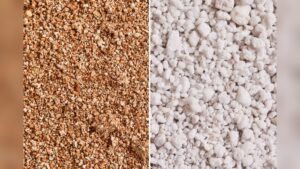
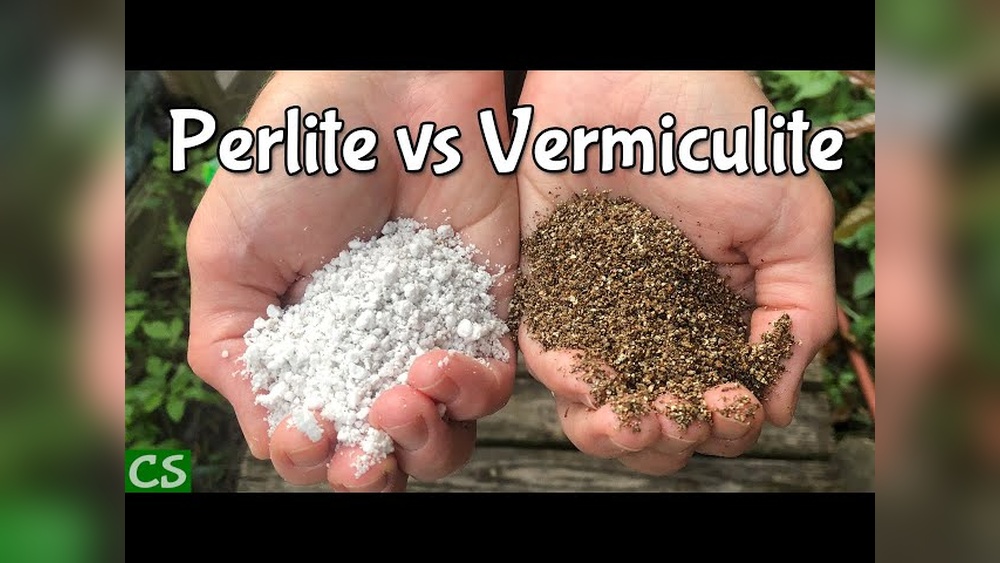
Perlite is white, lightweight, and has a rough texture. It looks like small, round, porous pebbles. Vermiculite appears shiny, brownish, and layered like tiny flakes. It feels soft and spongy to touch. These textures affect soil aeration and root growth. Perlite creates air spaces in soil. Vermiculite holds soil particles tightly together.
Water Retention Capabilities
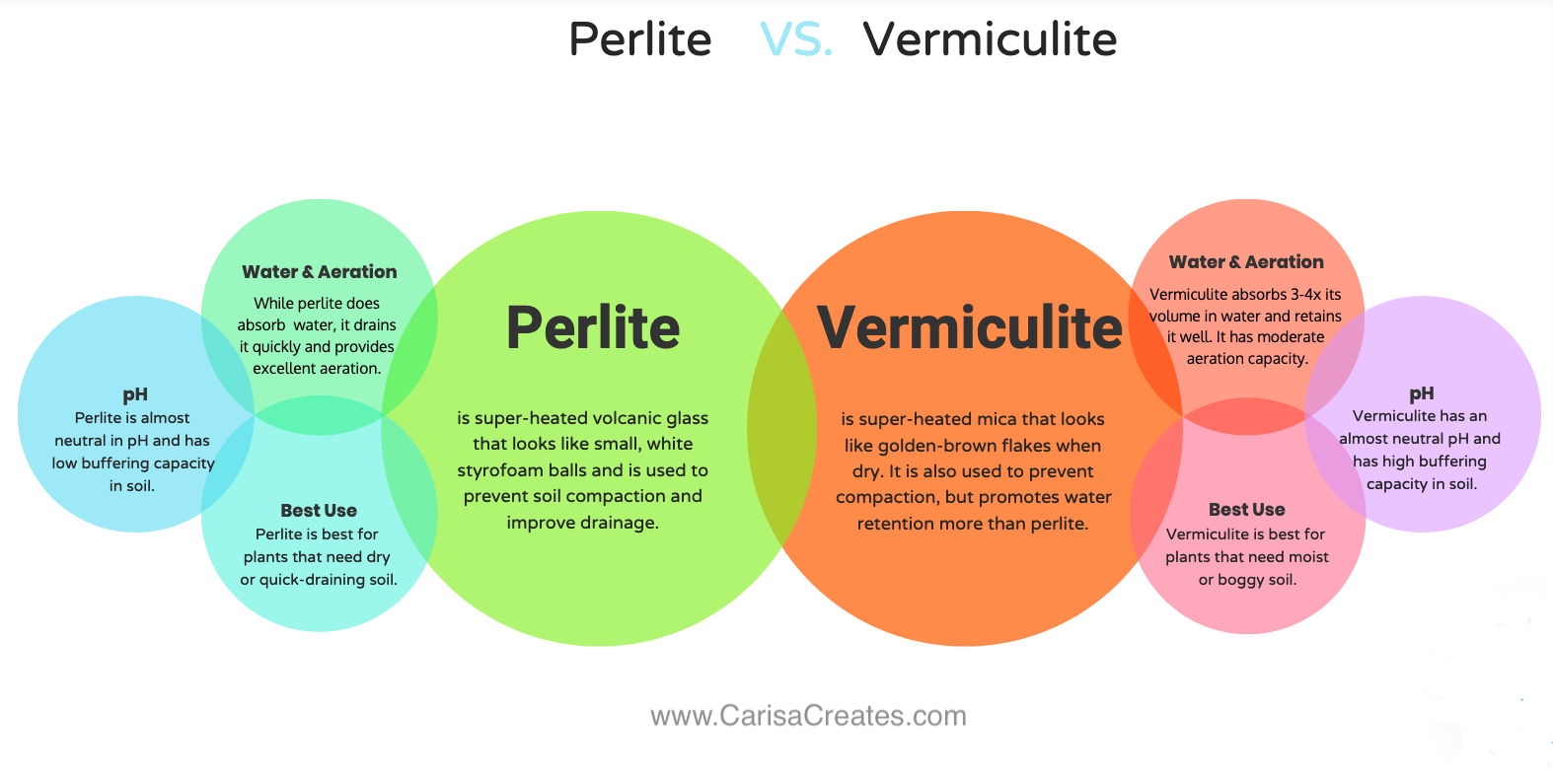
Perlite holds little water but drains quickly. It helps soil dry out faster and prevents root rot. Vermiculite absorbs and holds a large amount of water. It slowly releases moisture to plant roots. This makes vermiculite good for plants needing steady moisture. Choosing the right material depends on plant water needs and soil type.
Uses In Gardening
Perlite and vermiculite both improve garden soil but serve different purposes. Gardeners choose one or the other depending on what their plants need. Understanding their uses helps create healthy soil and better plant growth.
Soil Aeration
Perlite helps keep soil loose. It creates air pockets that allow oxygen to reach plant roots. This prevents soil from becoming hard and compacted. Vermiculite also improves aeration but holds more water. Perlite is better for plants that need well-drained soil.
Moisture Management
Vermiculite absorbs and holds water well. It releases moisture slowly to the roots. This keeps soil moist longer and reduces watering frequency. Perlite drains water quickly and does not hold much moisture. It suits plants that prefer drier soil conditions.
Benefits For Plants
Both perlite and vermiculite help plants grow strong and healthy. They improve soil in different ways. These materials create a better environment for roots and nutrients. This makes plants happier and more productive.
Understanding their benefits helps you choose the right one for your garden.
Root Growth Support
Perlite keeps soil light and airy. It lets air reach the roots easily. Roots grow better with more oxygen. Vermiculite holds water well but also lets some air in. It helps roots stay moist without drowning. Both help roots spread out and find water faster.
Nutrient Retention
Vermiculite holds nutrients in the soil. It slowly releases them to plant roots. This keeps plants fed longer. Perlite does not hold many nutrients. It helps nutrients move through soil better. This means roots can absorb nutrients quickly. Using both can balance water and nutrient supply well.
Environmental Impact
Understanding the environmental impact of perlite and vermiculite helps gardeners make smart choices. Both materials affect the planet differently due to how they are mined and processed. Knowing their sustainability and recyclability can guide eco-friendly gardening practices.
Sustainability
Perlite is a natural volcanic glass that expands when heated. Mining perlite uses energy but does not cause much pollution. The deposits are large, so supply lasts a long time. Vermiculite is a mineral that also expands with heat. Mining vermiculite can release dust and sometimes asbestos. This can harm workers and the environment if not handled carefully. Sustainable use means choosing materials with less harm and better safety.
Recyclability
Perlite is lightweight and can be reused in gardening many times. It does not break down quickly, so it stays useful for years. Recycling perlite reduces waste and need for new mining. Vermiculite can be reused but tends to break down faster than perlite. It absorbs water and nutrients, which may reduce its lifespan. Recycling vermiculite is possible but less common. Choosing reusable materials helps lower gardening waste.
Cost And Availability
Cost and availability play a big role in choosing between perlite and vermiculite. Both materials serve important gardening needs but differ in price and how easy they are to find. Knowing these differences helps gardeners make smart choices that fit their budget and local market.
Market Pricing
Perlite is usually less expensive than vermiculite. It is lightweight and easy to produce in large amounts. This lowers its cost for buyers. Vermiculite often costs more because it requires more processing. Its unique properties add value but raise the price. Small bags of perlite or vermiculite may cost more per pound. Bulk purchases tend to be cheaper for both materials.
Regional Accessibility
Perlite is widely available in many countries. It is mined in several places, making supply steady. Garden centers and online stores often stock perlite. Vermiculite is less common in some regions. Its availability depends on local mining and demand. Some areas may have limited vermiculite options. Buyers might find it harder to get vermiculite quickly. Checking local sources helps avoid delays.
Choosing The Right Option
Choosing the right soil amendment can improve plant growth and health. Perlite and vermiculite both help soil but serve different needs. Picking the correct one depends on your plants and soil type. Understanding these factors makes your choice easier and more effective.
Plant Type Considerations
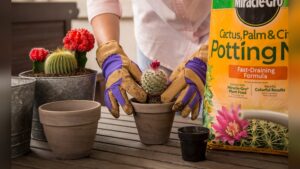
Some plants need well-drained soil. Perlite creates air pockets and improves drainage. It suits succulents and cacti perfectly. Vermiculite holds water and nutrients. It fits plants that need steady moisture, like ferns and vegetables. Knowing your plant’s water needs helps pick the best option.
Soil Conditions
Soil texture affects how perlite or vermiculite works. Sandy soil drains quickly and can dry out fast. Vermiculite adds moisture and nutrients here. Clay soil holds water and drains slowly. Perlite loosens clay soil and improves airflow. Testing your soil first guides you to the right choice.

Credit: savvygardening.com
Credit: carisacreates.com
Conclusion
Perlite and vermiculite both help plants grow better. Perlite keeps soil light and drains water well. Vermiculite holds water and nutrients for plants. Choosing the right one depends on your plant’s needs. Both improve soil but work differently. Use perlite for good airflow and quick drying.
Pick vermiculite to keep soil moist longer. Understanding their differences helps your garden thrive. Simple choices make big changes in plant health. Now, you can decide which suits your garden best.