Difference between Perlite And Vermiculite: Key Facts Revealed
Are you confused about whether to use perlite or vermiculite for your plants? You’re not alone.
Both are popular soil additives, but they serve very different purposes. Choosing the right one can make a huge difference in how well your plants grow. You’ll discover the key differences between perlite and vermiculite, so you can decide which one fits your gardening needs perfectly.
Keep reading to unlock the secrets that will help your plants thrive like never before!

Credit: www.youtube.com
Physical Properties
Understanding the physical properties of perlite and vermiculite helps in choosing the right soil amendment. These properties affect how each material interacts with water, air, and plant roots. Knowing these differences is key to healthy plant growth and soil management.
Appearance And Texture
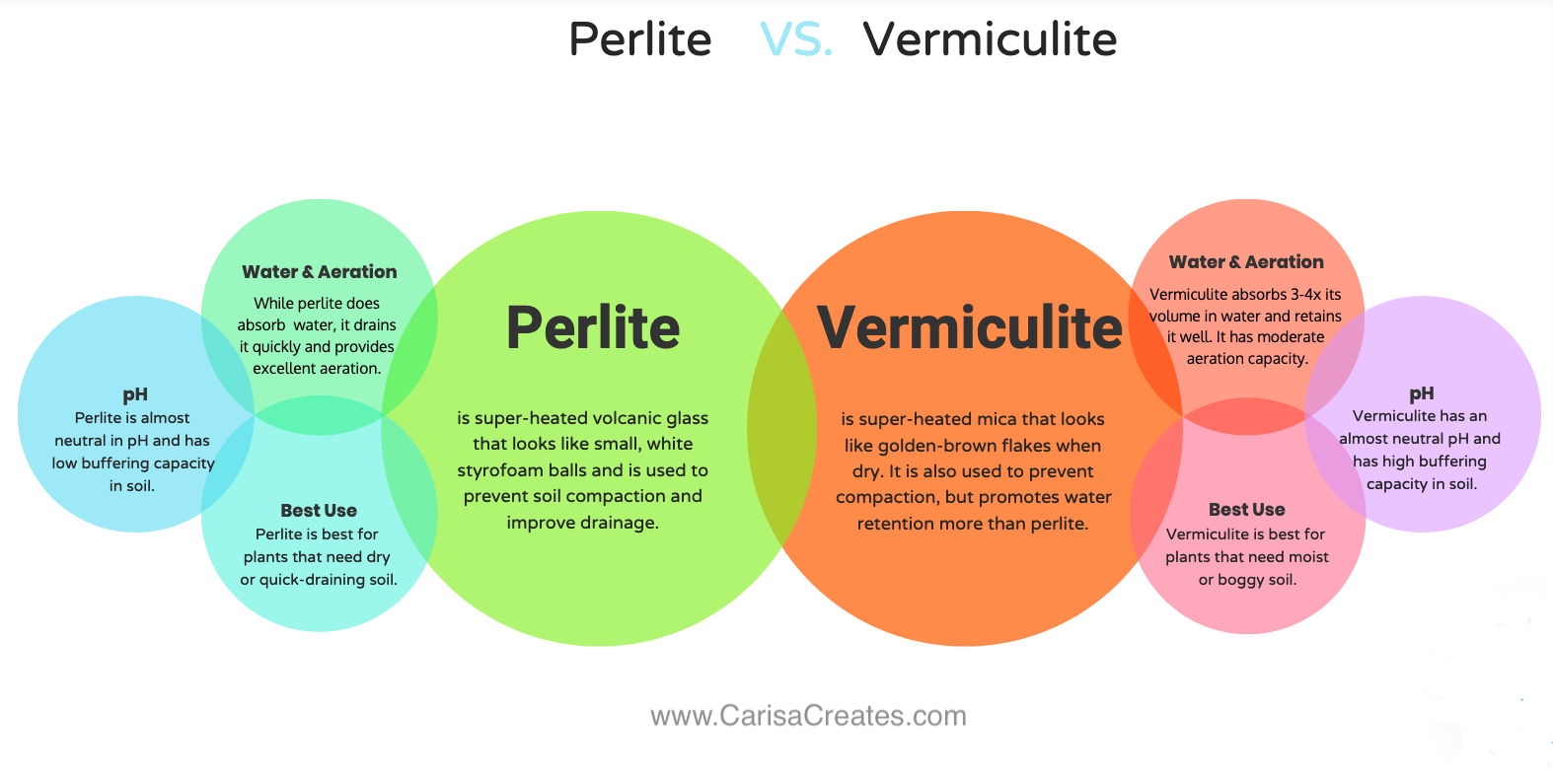
Perlite looks like small, white, lightweight balls. It has a rough, porous surface. Vermiculite appears as shiny, brownish flakes. Its texture is soft and spongy. These differences make them easy to distinguish in soil mixes.
Water Retention Capacity
Perlite holds very little water. It drains water quickly, allowing soil to dry fast. Vermiculite absorbs and holds a lot of water. It releases moisture slowly, keeping soil damp for longer periods.
Aeration And Drainage
Perlite improves aeration by creating air spaces in the soil. It prevents soil from becoming compacted. Vermiculite also helps with aeration but less than perlite. It retains moisture, which can slow drainage in some soils.
Credit: carisacreates.com
Chemical Composition
The chemical composition of perlite and vermiculite plays a key role in their performance in gardening. Understanding these differences helps in choosing the right soil amendment. Both materials come from natural minerals but have unique properties that affect soil health and plant growth.
Mineral Origins
Perlite is formed from volcanic glass. It expands when heated rapidly, creating a lightweight, porous material. Vermiculite comes from mica minerals. It expands with heat into accordion-like flakes. These different origins give each material distinct textures and functions.
Ph Levels
Perlite has a neutral to slightly alkaline pH, usually around 7 to 8. Vermiculite tends to have a neutral to slightly acidic pH, often between 6.5 and 7.2. These pH differences can influence soil acidity and affect nutrient availability for plants.
Nutrient Content
Perlite contains very few nutrients. It mainly improves aeration and drainage without adding minerals to the soil. Vermiculite holds more nutrients like potassium, magnesium, and calcium. It can slowly release these to plants, enriching the soil over time.
Gardening Uses
Perlite and vermiculite serve distinct roles in gardening. Both improve soil but suit different plants and needs. Understanding their gardening uses helps gardeners choose the right one for healthy plant growth.
These materials affect water retention, aeration, and nutrient holding. Each has benefits that support specific plant types and soil improvements.
Ideal Plant Types For Perlite
Perlite suits plants needing well-drained soil. Cacti and succulents thrive with perlite. It prevents waterlogging by improving drainage. Orchids and some herbs also prefer perlite in their soil mix. It keeps roots aerated and reduces root rot risk.
Ideal Plant Types For Vermiculite
Vermiculite fits plants that like moisture. Seedlings grow well in vermiculite-rich soil. Ferns and tropical plants enjoy the extra water retention. It helps plants that need steady moisture without drying out quickly. Vermiculite also supports heavy-feeding plants by holding nutrients.
Soil Amendment Benefits
Adding perlite lightens heavy clay soils. It creates air pockets for better root breathing. Vermiculite improves sandy soils by holding water and nutrients. Both help soil structure but in different ways. Perlite increases drainage, vermiculite boosts moisture retention. Using them properly improves plant health and growth.
Watering And Moisture Management
Watering and moisture management play a key role in healthy plant growth. Choosing the right soil amendment affects how water moves and stays in the soil. Perlite and vermiculite differ in their ability to hold and release moisture. Understanding these differences helps gardeners water plants properly and avoid overwatering or underwatering.
How Perlite Affects Soil Moisture
Perlite is a lightweight, porous volcanic glass. It improves soil aeration by creating air pockets. These pockets allow water to drain quickly. Perlite does not hold much water itself. Instead, it keeps the soil from becoming soggy. This helps prevent root rot in plants that need well-draining soil.
How Vermiculite Affects Soil Moisture
Vermiculite is a mineral that expands when heated. It absorbs and holds water like a sponge. Vermiculite releases moisture slowly to plant roots. It helps keep the soil evenly moist for longer periods. This makes vermiculite ideal for plants needing consistent moisture. It also improves nutrient retention in the soil.
Impact On Root Health
Soil with perlite encourages roots to grow strong by improving oxygen flow. Good aeration prevents roots from suffocating and rotting. Soil with vermiculite keeps roots moist, which supports plants that dislike dry conditions. Too much vermiculite can cause waterlogging in some plants. Choosing the right amendment depends on the plant’s water needs and root health requirements.
When To Avoid Each
Knowing when to avoid perlite or vermiculite can save your plants from stress and poor growth. Both materials serve different purposes in gardening. Choosing the wrong one may cause water issues or root problems. Below are key points on plants that dislike each and common mistakes to watch out for.
Plants That Dislike Vermiculite
Vermiculite holds water for a long time. Some plants do not like this wet environment. Cacti and succulents, such as aloe vera and agave, prefer dry soil. Vermiculite can cause their roots to rot.
Herbs that grow in dry, Mediterranean climates also avoid vermiculite. They need soil that drains quickly. Using vermiculite can keep the soil too moist for these plants.
Plants that dislike vermiculite include:
- Cacti
- Succulents
- Agave
- Aloe Vera
- Certain Mediterranean herbs
Plants That Dislike Perlite
Perlite drains water quickly and holds little moisture. Some plants need steady moisture and dislike fast-draining soil. Ferns and moisture-loving houseplants prefer vermiculite over perlite.
Seedlings that require constant moisture may dry out too fast in perlite. Using it alone can make the soil dry quickly, stressing young plants. Avoid perlite for plants needing consistent moisture.
Plants that dislike perlite include:
- Ferns
- Moisture-loving houseplants
- Seedlings needing steady moisture
Common Mistakes In Usage
Mixing perlite or vermiculite incorrectly causes problems. Using too much vermiculite can lead to soggy soil and root rot. Overusing perlite can dry out soil quickly and harm plants.
Another mistake is mixing vermiculite with other moisture-holding materials like peat or coco coir. This traps too much water around roots. Avoid using vermiculite in these mixes for plants that need sharp drainage.
Not adjusting soil mix based on plant type is a common error. Always match soil amendments to the plant’s water needs. This helps prevent poor growth and disease.
:max_bytes(150000):strip_icc()/SPR-vermiculite-vs-perlite-6455754-hero-1a2d3e14e0584fbaa4a990ebef1d494b.jpg)
Credit: www.thespruce.com
Environmental Impact
Perlite has a lower environmental impact because it is a natural volcanic glass that requires less energy to process. Vermiculite, mined from mineral deposits, can cause more habitat disruption during extraction. Both materials affect soil health differently based on their environmental footprint.
Sustainability Of Mining And Production
Perlite and vermiculite come from natural minerals mined from the earth.
Mining perlite uses less energy compared to vermiculite extraction.
Vermiculite mining can disturb larger land areas due to deeper deposits.
Processing perlite involves heating, which consumes energy but is relatively low.
Vermiculite requires more heating and expansion, increasing its energy footprint.
Both minerals are non-renewable resources but have long lifespans in use.
Biodegradability And Disposal
Perlite does not break down naturally because it is a volcanic glass.
It remains stable in soil for many years without decomposing.
Vermiculite is also inorganic and does not biodegrade quickly.
Neither perlite nor vermiculite produces harmful substances as they degrade.
Both materials can be reused in gardening or landscaping projects.
Disposal in landfills is safe but may occupy space for a long time.
Cost And Availability
Cost and availability play key roles when choosing between perlite and vermiculite. Budget and access affect your gardening decisions. Both materials serve different functions and come at different prices. Their availability varies by region and supplier. Understanding these factors helps you pick the right soil amendment for your plants.
Price Differences
Perlite usually costs less than vermiculite per volume. It is lightweight and easy to produce, lowering shipping costs. Vermiculite tends to be more expensive due to mining and processing needs. Prices also depend on product grade and packaging size. Bulk purchases often reduce price per pound for both materials.
Where To Buy Locally And Online
Garden centers and hardware stores often stock both perlite and vermiculite. Availability may vary by season and location. Some stores prefer carrying perlite because of its popularity. Online retailers offer a wider range of options and sizes. Buying online can save money but expect shipping fees. Local nurseries might provide smaller quantities for trial use.
Combining Perlite And Vermiculite
Combining perlite and vermiculite in your soil mix can balance moisture retention and aeration. Each material offers unique benefits that support healthy plant growth. Using both together creates an ideal environment for roots to thrive.
Perlite improves drainage and keeps the soil light and airy. Vermiculite holds moisture and nutrients, releasing them slowly to the plants. Together, they create a growing medium that neither dries out too fast nor stays soggy.
Benefits Of Using Both
Using perlite and vermiculite together boosts soil structure. Plants receive enough air around their roots to prevent rot. Moisture stays available longer, reducing frequent watering needs. Nutrients stay accessible, promoting steady growth. This mix suits many plants, from vegetables to houseplants.
Mixing Ratios For Optimal Growth
Start with a ratio of two parts perlite to one part vermiculite. Adjust based on plant needs and climate. For dry areas, add more vermiculite to retain water. For wet climates, increase perlite for better drainage. Always test and observe plant response to find the best balance.
Frequently Asked Questions
What Plants Do Not Like Vermiculite?
Plants that dislike vermiculite include drought-tolerant species like cacti, succulents, agave, and aloe vera. These plants need fast-draining soil, as vermiculite retains too much moisture, increasing root rot risk. Use perlite or pumice instead for better drainage.
When Not To Use Perlite?
Avoid using perlite in water-sensitive plants that need constant moisture, or in heavy clay soils where drainage isn’t an issue.
Should I Use Both Perlite And Vermiculite?
Using both perlite and vermiculite can balance moisture retention and aeration. Combine them for improved soil drainage and nutrient holding. Tailor the mix to your plant’s needs for best results. Avoid overusing either to prevent waterlogging or dryness.
What To Use Instead Of Perlite?
Use pumice, vermiculite, coarse sand, or horticultural grit as perlite alternatives for better drainage and aeration.
Conclusion
Perlite and vermiculite serve different roles in gardening. Perlite improves drainage and keeps soil light. Vermiculite holds moisture and nutrients well. Choosing the right one depends on your plant’s needs. For drought-loving plants, perlite works best. For moisture-loving plants, vermiculite suits better.
Understanding these differences helps your plants grow healthy. Use this knowledge to create the perfect soil mix. Simple choices can make a big difference in your garden.