How Often Should a Newly Planted Tree Be Watered
Planting a new tree is exciting, but knowing how often to water it can be tricky. Watering too little can leave your tree thirsty, while watering too much can drown its roots and cause serious damage.
So, how do you strike the perfect balance? You’ll discover simple, practical tips to keep your newly planted tree healthy and thriving. By understanding the right watering schedule and signs to watch for, you’ll give your tree the best start possible.
Keep reading to learn exactly how often you should water your new tree and avoid common watering mistakes that many people make.
Water Needs For New Trees
Newly planted trees need the right amount of water to grow strong roots. Water helps trees absorb nutrients and stay healthy. Too much or too little water can harm young trees. Understanding water needs helps you care for your tree properly.
Frequency Based On Tree Type
Different trees need different watering schedules. Some trees, like maples, need more frequent watering. Others, like oaks, prefer less water. Research your tree type to know how often to water. Adjust watering to fit the tree’s natural needs.
Influence Of Soil Type
Soil type affects how water moves and stays near roots. Sandy soil drains quickly and needs more frequent watering. Clay soil holds water longer, so water less often. Loamy soil is balanced and needs moderate watering. Check soil moisture to decide when to water next.
Weather Considerations
Weather changes affect how often trees need water. Hot, dry weather increases water needs. Cool or rainy weather reduces the need. Wind can dry out soil faster, requiring more watering. Watch the weather and adjust watering to keep soil moist but not soggy.

Credit: caffreytree.com
Risks Of Overwatering
Overwatering a newly planted tree can cause serious problems. It may seem like giving extra water helps, but too much water can harm the tree. Proper watering is key for healthy growth. Understanding the risks of overwatering helps protect your tree from damage and disease.
Root Suffocation And Rot
Roots need air to survive and grow. Too much water fills the soil, cutting off oxygen. This lack of air causes root suffocation. Wet soil also encourages root rot, a condition where roots decay and die. Rotting roots cannot absorb water and nutrients properly. This weakens the tree and may kill it.
Fungal Growth And Diseases
Excess moisture creates a perfect home for fungi. Fungal spores thrive in damp soil and on wet bark. These fungi cause diseases that attack the tree’s leaves, stems, and roots. Common problems include mold, mildew, and root fungus. Such diseases reduce the tree’s ability to grow and survive.
Signs To Watch For
Look closely at your tree for signs of overwatering. Yellowing leaves, especially on lower branches, are a warning. The soil may feel soggy and never dry out. Roots might look mushy, soft, or dark. Mushrooms or fungal growth near the tree base are clear alerts. Catching these signs early helps save your tree.
Signs Of Underwatering
Newly planted trees need the right amount of water to grow healthy and strong. Too little water causes stress and can harm the tree. Recognizing signs of underwatering early helps save the tree from damage. Watch for these clear signals that your tree needs more water.
Leaf Yellowing And Drooping
Leaves turn yellow when the tree lacks water. This happens because the tree cannot move nutrients properly. Drooping leaves also show the tree is struggling. The leaves may feel dry and brittle to touch. These signs mean the tree is not getting enough moisture.
Dry Soil Indicators
Check the soil around the tree often. Dry soil pulls away from the roots and feels hard. If the soil cracks or looks dusty, it is too dry. Use your finger or a small tool to test soil moisture below the surface. Dry soil means it is time to water the tree deeply.
Reduced Growth
Underwatered trees grow slower than healthy ones. New shoots and leaves may stop forming. The tree may look smaller or thinner than expected. Lack of water limits the tree’s ability to build strong roots. Reduced growth is a clear sign to increase watering.
Proper Watering Techniques
Proper watering techniques help young trees grow strong roots and stay healthy. Watering a newly planted tree correctly improves its survival rate. It also prevents problems like root rot or drought stress.
Use methods that soak the soil deeply. Avoid frequent shallow watering. This encourages roots to grow downward and spread out. Applying the right amount of water at the right time is important.
Deep And Slow Watering
Water your tree slowly to allow moisture to reach deep roots. Use a drip or slow hose method. This avoids runoff and water waste. Deep watering supports strong root development. It helps the tree survive dry periods later.
Watering Volume And Coverage
Apply enough water to wet the entire root zone. The root zone often extends beyond the tree’s branches. Watering only the trunk base is not enough. Spread water evenly around the tree in a wide circle. This ensures all roots get moisture.
Timing And Frequency
Water newly planted trees more often during the first few weeks. After that, reduce frequency but increase water amount. Early morning or late afternoon are the best times to water. Avoid watering during hot midday hours. Let the top few inches of soil dry before watering again.
Monitoring Soil Moisture
Monitoring soil moisture is essential for the health of newly planted trees. It helps ensure trees receive enough water without being overwatered. Checking soil moisture regularly allows you to adjust watering to match the tree’s needs. This prevents root rot and encourages strong root growth.
Using Soil Probes Or Digging
Use a soil probe or a small shovel to check moisture. Insert the probe or dig about 2 to 4 inches deep near the tree’s root zone. Feel the soil to see if it is dry, moist, or wet. This simple method gives a clear idea of the soil’s condition below the surface.
Recognizing Saturation Levels
Look for signs of too much water in the soil. Soil that feels soggy or sticks to your fingers is overwatered. Dark, muddy soil also shows excess moisture. Avoid watering if the soil is saturated to prevent suffocating the roots.
Adjusting Watering Accordingly
If the soil is dry, water the tree deeply and slowly. Water until the soil is moist but not soaked. If the soil is still wet, wait a few days before watering again. Adjust watering frequency based on weather and soil moisture checks.

Credit: www.youtube.com
Mulching Tips
Mulching plays a key role in caring for newly planted trees. It helps keep moisture in the soil and protects roots from extreme temperatures. Using mulch correctly supports healthy growth and reduces watering needs.
Proper Mulch Placement
Spread mulch evenly around the tree’s base. Keep it about 2 to 4 inches thick for best results. Avoid piling mulch too deep, as it can block air from reaching the roots. Leave a small space around the trunk clear of mulch to prevent problems.
Benefits For Moisture Retention
Mulch holds water in the soil longer. It slows evaporation, so the tree can access moisture between waterings. This helps maintain consistent soil dampness, which is vital for young roots. Mulch also reduces soil temperature swings.
Avoiding Trunk Contact
Do not let mulch touch the tree trunk. Mulch piled against the trunk stays wet and can cause rot. This creates a perfect spot for pests and diseases to enter. Keep mulch a few inches away from the trunk for healthy growth.
Adjusting Watering For Rain
Adjusting watering for rain is essential for the health of newly planted trees. Rain naturally waters the soil, reducing the need for extra watering. Understanding how rain affects soil moisture helps prevent overwatering. You can keep your tree healthy by balancing natural rain and supplemental water.
When To Skip Watering
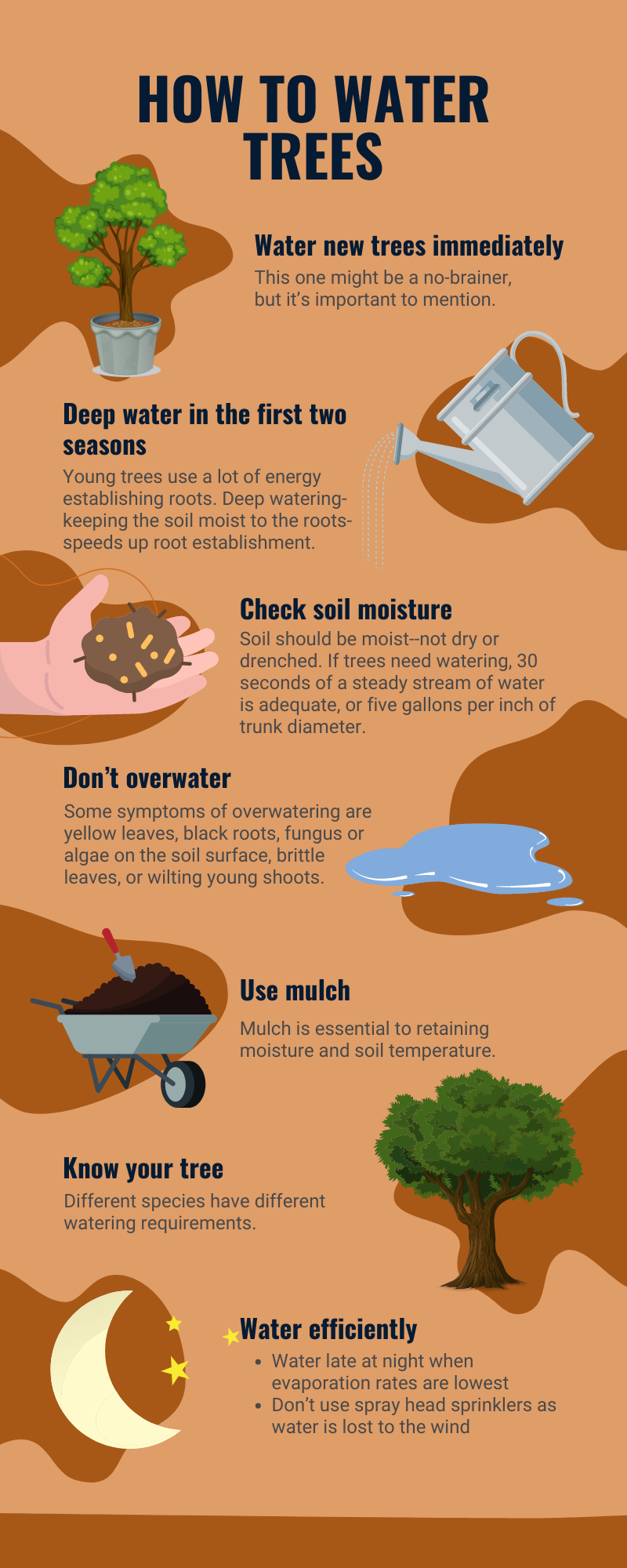
Skip watering after a good rain. Check the soil moisture before watering. If the soil feels wet two inches below the surface, hold off watering. Watering on wet soil can harm roots and cause rot. Skipping watering saves water and protects the tree.
Impact Of Rain On Soil Moisture
Rain increases soil moisture and helps roots absorb water. The amount of rain needed depends on soil type and tree size. Clay soil holds water longer than sandy soil. A few inches of rain can saturate the root zone. Keep an eye on the weather to adjust watering.
Balancing Natural And Supplemental Water
Balance rainwater and supplemental watering carefully. Use rain as the main water source. Add water only when the soil starts to dry. Deep watering encourages strong root growth. Avoid frequent shallow watering that keeps soil soggy. Proper balance promotes healthy tree growth.
Credit: www.precisiontreemn.com
Seasonal Watering Changes
Seasonal changes greatly affect how often a newly planted tree needs water. The tree’s water needs shift with temperature, rainfall, and growth cycles. Adjusting watering schedules by season helps the tree grow strong and stay healthy. Understanding these changes prevents overwatering or underwatering, both harmful to young trees.
Spring And Summer Needs
Spring and summer bring warmer weather and faster tree growth. Newly planted trees need more water during these months. Water deeply once or twice a week, depending on rainfall. The soil should stay moist but not soaked. Hot days dry soil quickly, so check moisture often. Early morning watering reduces evaporation and helps roots absorb water better.
Fall And Winter Adjustments
Fall and winter are cooler with more rain and less tree growth. Trees need less water in these seasons. Water only when the soil feels dry about two inches deep. Avoid watering if rain has been frequent. Overwatering in cold weather can cause root problems. Mulch helps keep soil moist and protects roots from freezing.
Preparing Trees For Dormancy
Before winter dormancy, gradually reduce watering. This helps trees prepare for their resting phase. Stop watering when the ground freezes to avoid root damage. Dormant trees survive on stored moisture. Proper watering before dormancy improves tree health in spring. Always monitor soil moisture and adjust watering as needed.
Long-term Tree Care
Long-term care is key for a healthy, strong tree. After the first few months of frequent watering, the tree begins to grow deeper roots. This allows it to access water from a larger soil area. Proper care during this phase supports the tree’s survival through dry periods and stress.
Transitioning From Frequent To Regular Watering
Start by slowly reducing how often you water. Move from daily or every-other-day watering to once or twice a week. This encourages roots to grow deeper, seeking water below the surface. Water deeply during each session to soak the root zone well.
Avoid sudden changes. Gradually decrease watering frequency over several weeks. This helps the tree adjust without stress or shock.
Signs Of Established Root Systems
Look for new growth in leaves and branches. Healthy, green leaves and steady growth show the tree is thriving. The tree may also be less droopy during hot, dry days. Strong roots anchor the tree firmly in the soil.
Another sign is less need for watering. The soil stays moist longer, and the tree recovers quickly after dry spells.
Ongoing Maintenance Tips
Check soil moisture regularly by feeling the soil 2-4 inches deep. Water only if the soil feels dry. Mulch around the tree helps retain moisture and reduce weeds. Keep mulch a few inches away from the trunk to prevent rot.
Protect the tree from damage by lawn equipment and pests. Prune dead or damaged branches to promote healthy growth. Adjust watering during rainy seasons to avoid overwatering.
Frequently Asked Questions
Can You Overwater Newly Planted Trees?
Yes, overwatering newly planted trees can suffocate roots and cause rot. Water deeply but let soil dry between watering.
How Long Should You Water Newly Planted Trees?
Water newly planted trees deeply for about 30 minutes to saturate the root zone. Repeat watering every 2-3 days for the first 2-3 weeks, then weekly for the first year. Adjust based on soil moisture and weather to avoid overwatering or underwatering.
How Often Should A Newly Planted Tree Be Watered?
Water a new tree deeply once or twice a week. Adjust based on weather and soil type.
Can Overwatering Harm A Newly Planted Tree?
Yes, too much water can cause root rot and suffocate the roots.
Conclusion
Newly planted trees need careful watering to grow strong roots. Water deeply but give the soil time to dry. Check soil moisture regularly to avoid overwatering or underwatering. Adjust watering based on weather and soil type. Proper watering helps trees thrive and stay healthy.
Keep mulch a few inches from the trunk to prevent disease. Patience and attention make all the difference for young trees.