Should Plants Be Watered at Night: Myths vs. Proven Facts
Are you wondering if watering your plants at night is a good idea? It might seem convenient to give your garden a quick drink after a busy day, but is it really the best choice for your plants’ health?
The truth is, when you water can make a big difference in how well your plants grow and stay healthy. Watering at night can sometimes cause problems like fungal diseases, pests, and root rot. But don’t worry—there are situations when nighttime watering works just fine, especially for indoor plants or with the right watering methods.
Keep reading to discover the best time to water your plants and how to avoid common mistakes that could harm your green friends. Your plants will thank you!
Credit: www.homesandgardens.com
Nighttime Watering Risks
Watering plants at night carries certain risks that can affect their health. The cool, damp conditions after watering can create problems for outdoor plants. Wet leaves and soil may stay moist for a long time. This moisture can lead to diseases and attract pests. Understanding these risks helps you protect your garden and keep plants strong.
Fungal Growth And Diseases
Wet leaves and soil overnight create a perfect spot for fungi. Mildew, blight, and other fungal diseases thrive in damp conditions. These diseases can damage leaves and stems quickly. Fungal spores spread easily in the dark, moist environment. This harms the plant and slows its growth.
Pest Attraction
Damp soil and wet foliage attract many pests. Slugs, snails, and insects prefer moist places to hide. They feed on leaves and roots, causing harm. Watering at night increases the chance of pest problems. These pests can damage plants and reduce their health.
Root Rot Issues
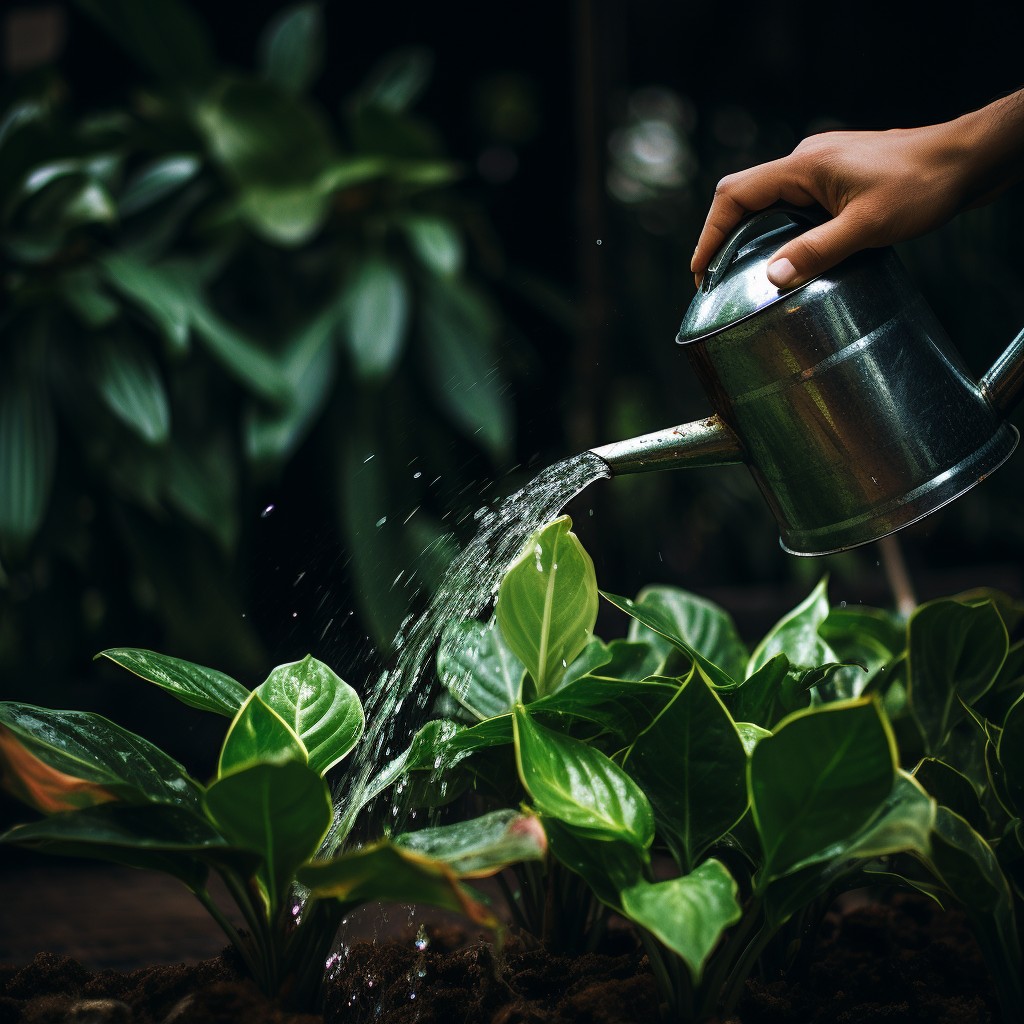
Too much water in the soil leads to root rot. Roots need air to stay healthy. Constantly wet soil blocks air from reaching roots. This causes roots to decay and die. Root rot weakens plants and can kill them over time. Night watering can keep soil too wet for too long.
Credit: www.interiorcompany.com
When Night Watering Works
Watering plants at night can sometimes be helpful. Certain conditions make nighttime watering suitable. Understanding when it works can improve plant health and conserve water.
Indoor Plant Benefits
Indoor plants often thrive with night watering. The controlled environment reduces risks of disease. Leaves stay dry because of less air moisture. This lowers chances of mold and fungus. Indoor plants absorb water well during night hours. Night watering helps maintain steady soil moisture.
Watering Necessity At Night
Sometimes night watering becomes necessary. This happens during very hot days or droughts. Night watering prevents plant stress and wilting. It also helps when morning watering is not possible. Watering at night minimizes water loss from evaporation. Soil stays moist longer, helping roots absorb water fully.
Using Soaker Hoses And Drip Irrigation
Soaker hoses and drip irrigation work well for night watering. They deliver water directly to the soil, not leaves. This reduces the risk of fungal diseases. Water seeps slowly and evenly around roots. These systems save water by avoiding runoff and evaporation. Using them at night keeps plants healthy and hydrated.
Morning Watering Advantages
Watering plants in the morning offers clear benefits for healthy growth. The cooler temperatures and gentle sunlight help plants absorb water well. Morning watering sets plants up for a strong day. It reduces water loss and keeps leaves dry. This practice supports robust roots and prevents common plant problems.
Water Absorption Efficiency
Plants absorb water best in the morning. The soil is cooler and holds moisture longer. Roots take in water before the sun heats the ground. This means plants get enough hydration to stay healthy. Morning watering helps plants prepare for the day’s heat and dryness.
Reduced Evaporation
Water evaporates less in the morning. The air is cooler and less windy than midday. This saves water and helps soil stay moist. Less evaporation means more water reaches the roots. Efficient watering reduces waste and supports plant growth.
Foliage Drying Benefits
Watering in the morning lets leaves dry during the day. Dry leaves reduce the risk of fungal diseases. Wet leaves at night invite pests and mold. Morning watering keeps plants healthy and strong. It creates a better environment for growth.
Midday And Evening Watering
Watering plants at the right time plays a crucial role in their health. Midday and evening watering each have unique effects on plants. Understanding these can help you choose the best time to water.
Challenges Of Midday Watering
Watering plants during midday can cause water to evaporate quickly. The sun’s heat makes water disappear before plants absorb it. This leads to wasted water and thirsty plants. Wet leaves under strong sun may burn. This can harm delicate foliage. Plants struggle to stay hydrated in the heat. Soil may dry out faster despite watering. Midday watering is less efficient and can stress plants.
Evening Watering Considerations
Watering in the evening keeps soil moist for longer. Cooler temperatures reduce water loss from evaporation. This helps plants stay hydrated overnight. Yet, wet leaves can stay damp for hours. This creates a perfect place for fungal diseases to grow. Mold and mildew thrive in moist, dark conditions. Pests such as slugs may also be attracted. To reduce risks, water the soil directly, not the leaves. Using drip irrigation or soaker hoses is best. Evening watering suits indoor plants well. Outdoor plants need care to avoid moisture problems.
Watering Tips For Healthy Plants
Proper watering helps plants grow strong and healthy. Knowing how to water plants correctly can prevent diseases and promote good root development. Use careful watering methods to keep your plants thriving.
Avoiding Wet Leaves
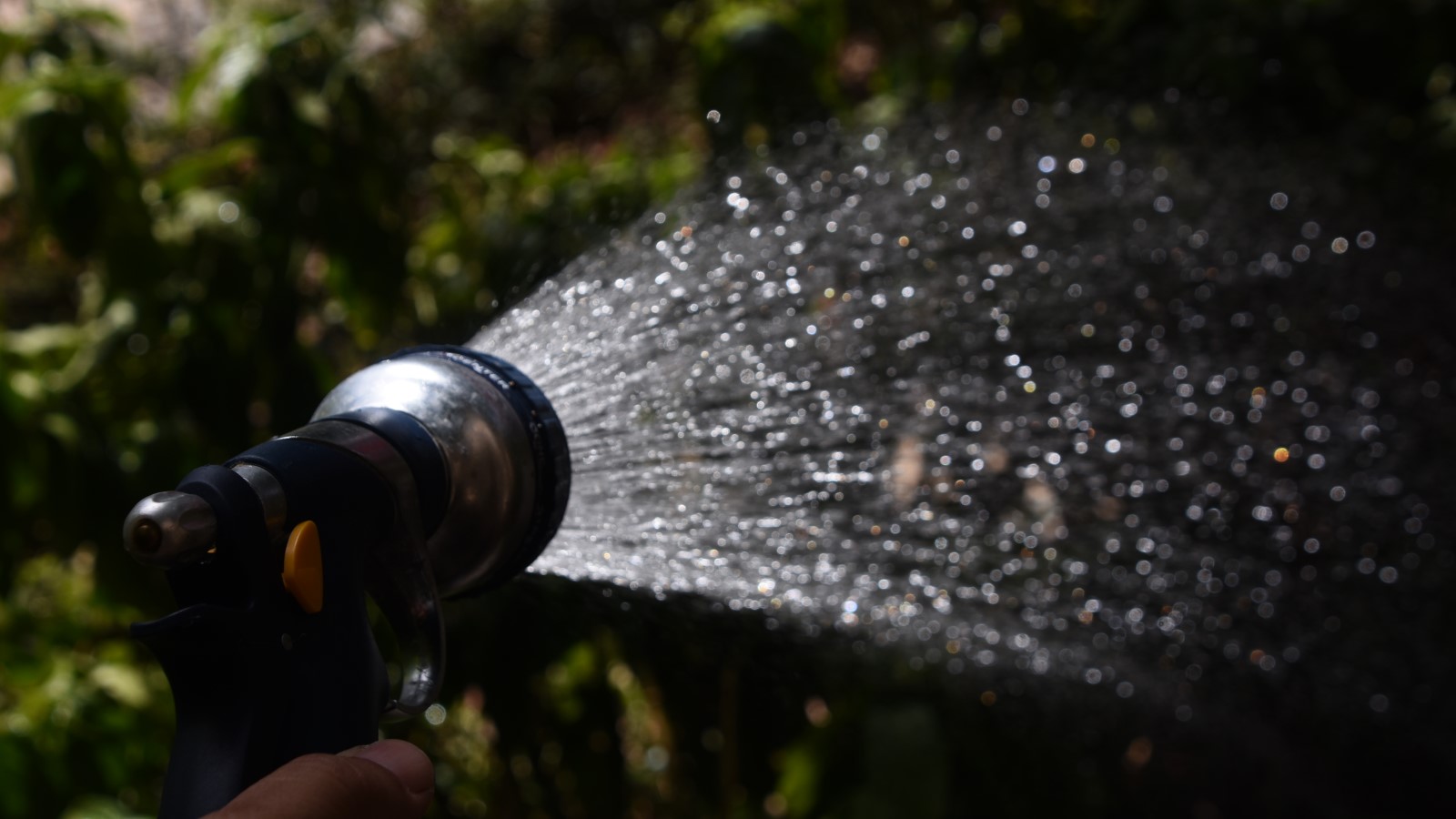
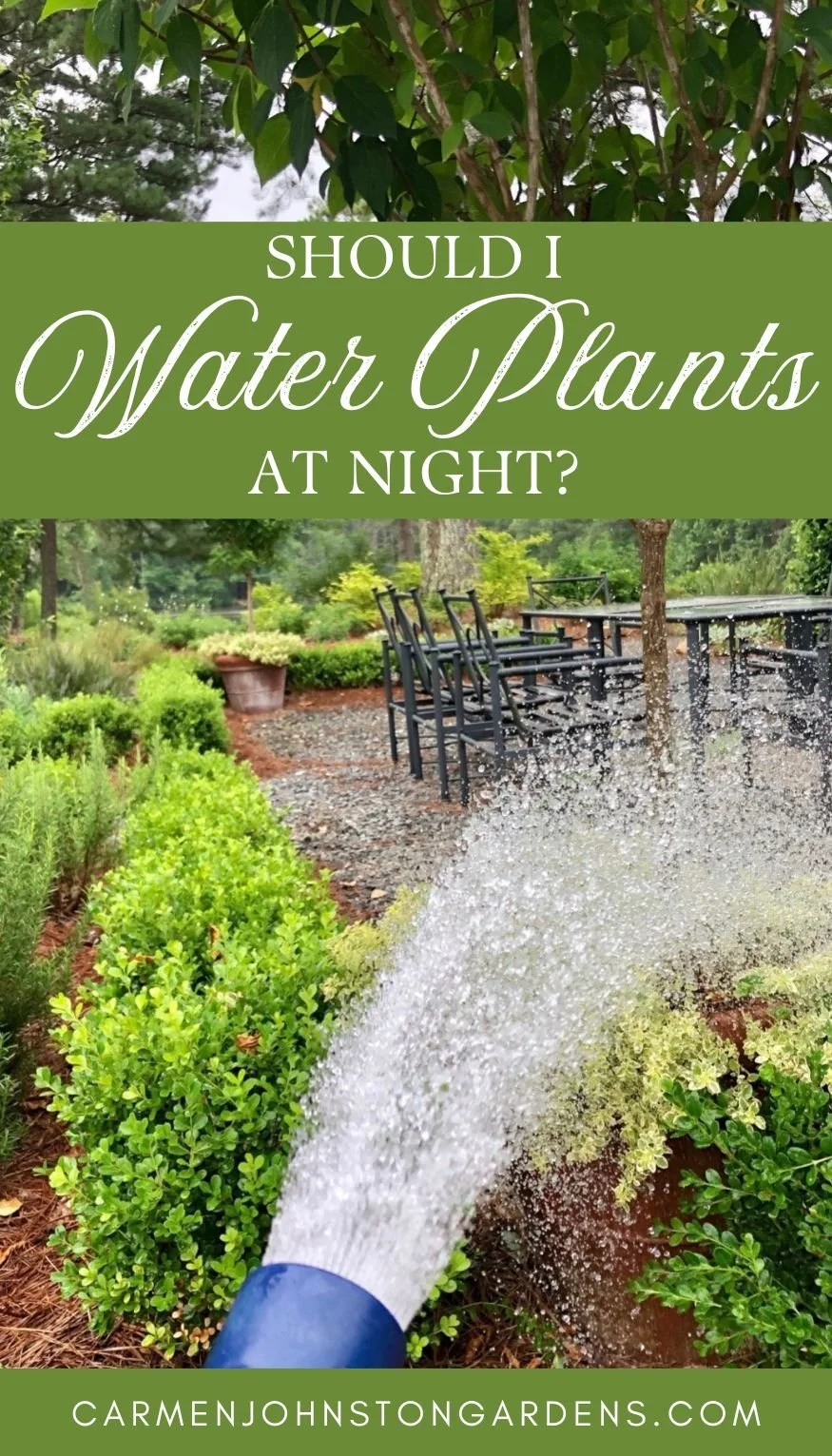
Water plants at the base, not on the leaves. Wet leaves stay damp longer and invite fungus. This can cause leaf spots and mildew. Using drip irrigation or soaker hoses helps keep leaves dry. Dry leaves reduce the risk of disease.
Soil Moisture Management
Check soil moisture before watering. Soil should be moist but not soggy. Overwatering can cause root rot and kill plants. Use your finger to feel the soil an inch below the surface. Water only if it feels dry to the touch.
Adapting To Weather Conditions
Adjust watering based on weather. Water less during rainy periods to avoid soggy soil. Increase watering during hot, dry weather to prevent wilting. Early morning watering suits most climates. This helps water soak in before heat increases evaporation.
Credit: www.carmenjohnstongardens.com
Frequently Asked Questions
Is It Okay To Water The Plants At Night?
Watering plants at night can cause wet leaves and soil, increasing fungal diseases and pests. Morning watering helps leaves dry and reduces evaporation. For indoor plants or using soaker hoses, nighttime watering is fine. Early morning remains the best time for most outdoor plants.
What Is The Best Time To Water Plants In Hot Weather?
Water plants early in the morning during hot weather. This reduces evaporation and allows leaves to dry, preventing diseases. Avoid watering midday or at night to protect plants from heat stress and fungal issues.
When Should You Not Water Your Plants?
Avoid watering plants at night outdoors to prevent fungal diseases, root rot, and pests from wet leaves and soil. Water early morning instead. Indoor plants can be watered at night if needed. Use soaker hoses to water soil directly and reduce foliage moisture.
Is Overnight Water Good For Plants?
Overnight water can harm outdoor plants by promoting fungal diseases and pests due to prolonged moisture. Morning watering is best. Indoor plants tolerate nighttime watering well. Use soaker hoses to water soil only at night and avoid wetting leaves to reduce risks.
Conclusion
Watering plants at night can be done but with care. Outdoor plants risk fungal diseases if leaves stay wet too long. Indoor plants handle night watering better due to controlled conditions. Using soaker hoses helps keep foliage dry and prevents problems.
Morning watering remains best, letting plants absorb water and dry before heat. Always check your plants’ needs and environment before deciding. Healthy plants grow with proper watering habits. Choose the right time and method for your garden’s success.